Monday, May 3, 2021

The Falcon and the Winter Soldier

         Now that The Falcon and the Winter Soldier has concluded and enough time may have passed for most people to view it, I wanted to offer some thoughts on the show, as I did previously with WandaVision. Warning: there are spoilers and, as always, if you enjoy reading these reflections, you just might like my new book Religion and Myth in the Marvel Cinematic Universe, available on Amazon and discussed in detail in a previous post.


        Overall, I enjoyed The Falcon and the Winter Soldier very much. As some other commenters have noted, it brought a level of realism to the MCM that has arguably been missing. During the various episodes we saw the reality of systemic racism in the United States and the challenges and self-doubt an African American man would face assuming the mantle of "Captain America." Interestingly, at least one writer has argued that the series did not actually move the overall Marvel story forward, since Sam Wilson ended up with the shield again, the Flag Smashers appeared then disappeared, Zemo is back in prison (again), and so on. 

        In contrast, I think a lot happened to mature the narrative and all its characters. We discovered the complicated and racially-charged history of the title "Captain America" through the story of Isaiah Bradley.

        Bucky battled his Winter Soldier demons, providing a genuinely touching moment when we see him finally realize his mental Hydra programming has been eradicated.
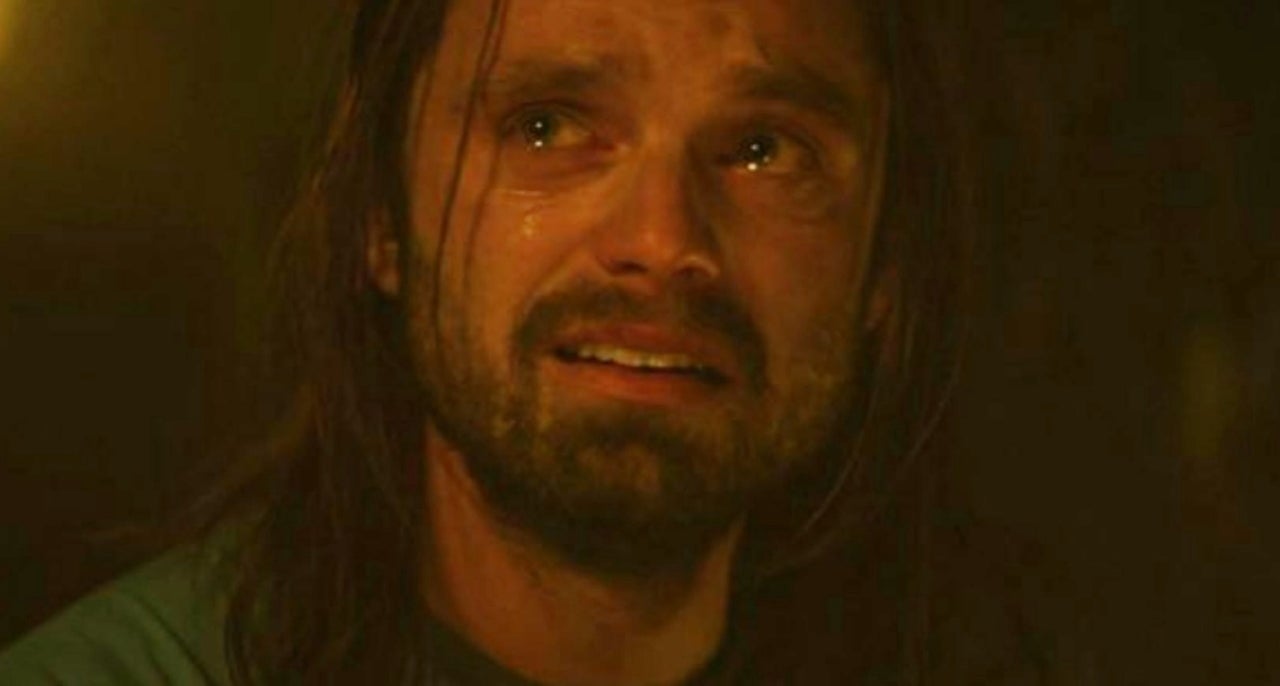
    

        From an earlier discomfort and antagonism, Sam and Bucky developed a genuine chemistry that I enjoyed.

        Most of all, I thought that the entire point of the series was that Sam needed to go on the journey to claim the shield, that he could only become Captain America by taking the title, not just receiving it from Steve Rogers. When John Walker proves himself unworthy to possess the shield and Sam reclaims it, gingerly cleaning the blood away, the moment felt a little like Arthur taking Excalibur, the rightful owner of the object, the symbol, and the legacy finally inheriting his rightful due in full. Without that build up, struggle, and reckoning (which also involved the other episodes' investment in the racial over- and undercurrents), the last installment's revelation of Sam as the new Captain America would not have meant as much nor had the impact it did.


        This particular theme of transition and the struggle of the successor to earn the mantle of the predecessor seems to be emerging as a defining characteristic of these Phase 4 installments. Spider-Man struggled with being Iron Man's de-facto heir in Spider-Man: Far From Home, temporarily relinquishing Stark's bequeathed technology when he believed he was not up to the task. Sam Wilson similarly gives up the shield at the beginning of The Falcon and the Winter Soldier, only to wrest it back from John Walker, with Bucky's help, of course. Will we see a similarly transition in Thor: Love and Thunder with Jane Foster becoming the new Thor?

       Another obvious theme of The Falcon and the Winter Soldier was ambiguity. Due to the shameful past of abusing and erasing Isaiah Bradley from history (though Sam partly corrects the latter in the final episode), the role of Captain America itself is tainted. During the show's run, John Walker also occupies an ambiguous space. He is clearly not equal to the task of being Captain America and spectacularly buckles under its weight, committing a number of egregious infractions. Still, his eagerness to fulfill the role is sympathetic, and in the end he makes some of the right decisions. Similarly, Karli Morgenthau's aims with the Flag Smashers are relatable, as is Sharon Carter's decision to turn to crime.

        Perhaps the best example is the portrayal and reception of the character Zemo. Previously seen as the antagonist in Captain America: Civil War, Zemo plays a role as a kind of anti-hero in the series. Opposed to the existence of all superheroes and super-soldiers due to the inherent tendency toward supremacy, Zemo provides a ruthless cynicism to the show and, through his financial means and charm as a Baron, a suave James Bond-like air. By some accounts, he represents the best aspect of the show and brief footage of him dancing in a Madripoor club went viral as a meme, leading to an extended hour-long mix you can watch here:

        Despite the character's charm and, again, relatability of his motives, it shouldn't be forgotten that he has used whatever means necessary to achieve his ends, even killing innocents. With the impending release of a series on Loki, I have a feeling there will be even more ample opportunities to talk about this theme of ambiguity.

        News was recently released about the possibility of a fourth Captain America film, presumably involving most or all of the main characters of the television show, which ended by changing the title from The Falcon and the Winter Soldier to Captain America and the Winter Soldier. I, for one, anxiously await such a film to see Sam and Bucky's journey continue. 

        I hope you enjoyed these reflections! Until the next time, take care.

Tuesday, April 27, 2021

Book Sale and Signing!

         This past Saturday I had the great honor to be part of a local author event at the Lebanon, Indiana bookstore Between The Pages. I got to meet seven other local authors, talk about the publishing business, and have conversations about my books with customers. It was a very nice event and several people even decided to take home copies of my books Religion and Myth in the Marvel Cinematic Universe and Malleable Mara: Transformations of a Buddhist Symbol of Evil. Here's a picture of me and my set up:

        My family even stopped in to say hello. (We're all masked up, but I'm pretty sure everyone's smiling.)


        Two former students from Saint Joe's stopped by as well! It was great to see them.

        All in all, it was a very enjoyable event. It's true that big book sellers are able to offer more inventory and buying online enables you to order practically anything from anywhere (making it easier to acquire rarer and harder to find books). Admittedly, currently online sites like Amazon are still the best way to get copies of my books. However, events like Saturday's really bring home the importance of local, independent book shops. We were able to meet members of the public we otherwise wouldn't have met, spend time talking about local issues we otherwise might not have thought to commiserate about, and just generally create more social bonds than the average trip online or to a big book store would ever foster. Years ago, when I taught Core 1 at Saint Joe's, we read the book Deep Economy by Bill McKibben. McKibben argues, in part, that our capitalistic economy has proven very adept at providing us with "more stuff" but "more stuff" is not better stuff. Ultimately, he says that we need to reinvest in those things that create human relationships, and the best way to do that is to go into your local community. This past Saturday was a sterling example.

        So, next time you have a chance, go visit your local independent bookstore!

Monday, April 19, 2021

Smith Cemetery

    How will we be remembered after we're gone? What will be left of our lives and our legacy once we're dead? Are there really any more quintessential questions to face? As you get older, you start to think about these things and there seem to be more and more occasions to dwell upon them.

        Behind our house is a farmer's field, at least for the time being. During the fallow season it's a place we sometimes go walking down, at least on the edge, to get some exercise and look at the huge retaining pond put in as a barrier between one of the large shipping warehouses in the area and our subdivision. There are at least four such warehouses clustered together, with docking bays to load up semis to hit the nearby interstate on-ramp.

        When it was very snowy a few months ago, we went on one of these walks and I spotted some odd stones in the distance under a few lone, skeletal trees. Recently, when I had the time and the weather was better, I took a trip back and discovered, to my surprise, that the stones belonged to a small nineteenth century family grave. Here is a picture of the cemetery, where its proximity to the warehouse is apparent.


        In this image, from further away, you can make out the warehouses bounding the cemetery on the south and east. You can just make out the monument stones in between the trees.


        Here is a close-up of the foreboding tree nearest the graves. It's rather a spooky place to be - even with another warehouse lurking in the background.


        I began to wonder who the people buried in these plots were and I took photos of the stones where the inscriptions were still legible and had not yet been worn down by time and the elements.

        Though I am a neophyte at this sort of research, after doing some internet sleuthing and delving into sources available through the kind help of the county historical society, I've been able to garner some information about those interred at this site. As the name on the stone in the picture above suggests, this very small site is usually known as "Smith Cemetery," but alternately as "Thornley Cemetery" based on the name of a small village that used to exist nearby. Twelve individuals (half from the Smith family) are buried there with the only information available pertaining to members of the Smith family, primarily the patriarch, William Warren Smith. It seems that Smith was originally born near Baltimore in November 1814. (For history buffs, that's just a couple of months after the Battle of Baltimore, the event during the War of 1812 that inspired the composition of the "Star Spangled Banner.") After living in Virginia for a time, Smith and his brother moved to Ohio, where he met and married Catharine Weaver - the Catharine Smith whose marker is pictured above. William and Catharine had two daughters in Ohio, with the oldest dying shortly after birth. In 1842, William and Catharine moved west to Boone County, Indiana, presumably to search out better prospects for land. According to the old record book Early Life and Times in Boone County (1887):

                [William and Catharine Smith] landed in the dismal swamps of Boone, where
                frogs croaked, owls hooted, and wolves howled. In the midst of all this they 
                bought forty acres for a consideration of two hundred and twenty-five dollars.
                The next thing in order was to build a cabin and at this station pioneer life 
                began. In the midst of the forest, without money, without roads, and a long
                way to market through mud and mire -- what was to be done? They had come
                to stay and had brought their iron will with them (364-365).

        Among other tidbits, William Smith was a "Predestinarian," a believer in the Calvinist Christian theology that everything is predetermined, including one's salvation or damnation. He was also a Democrat, which meant something quite different in the nineteenth century. Nothing remains of the cabin the Smiths built, but according to other records they went on to have five more children. Two of those children (Martha and Margaret) along with a daughter-in-law (Nancy) are buried with William and Catharine in the little cemetery. Interestingly, Basil Smith, the son who married Nancy, is not buried there. According to A Portrait and Biographical Record of Boone County (1895), another son, Warren J. Smith, born in 1849, took over the farm after William Smith died in 1884. Catharine lived with him until she died in 1898. Like his brother Basil, Warren Smith is not recorded as being buried in the family cemetery, but in the same book I was able to find a picture of him from 1895, when he would have been roughly my age:


                Though there are still many gaps, not least of which being the history of the other six individuals buried in the cemetery, it is a thrilling and strangely humbling experience to discover these facts and even look upon a picture of a person related to the people who lived in that space.

                My feelings are tempered, though, by the future of the area. With the proximity and quantity of warehouses going in, the site will become increasingly closed off and inaccessible, even to the point of vanishing as so-called development encroaches on the cemetery. Right now, the north and west (shown below) is the only area of the cemetery not closed off by buildings.


        This will all change in a few months when the area pictured above will become the site of -- you guessed it -- yet another shipping warehouse, meaning the Smith Cemetery will have such structures surrounding it from all four directions. This small piece of history, the legacy of these individuals, will be ground under the wheels of the industrialized consumerist complex, sacrificed on the altar of capitalistic shipping efficiency, with nothing in sight but acres and acres of concrete. Is that how any of us would want to be remembered?

        Iron wills or not, in the great gulf of space and time, we will all be forgotten. However, there's something about the way this cemetery is being symbolically erased that profoundly bothers me. Without being remembered, did we ever really live at all? If we can at least remember these people, in a way it's a kind of resistance, like the plant that persists to burrow its way up through layers of asphalt and concrete. In a way, soon enough, that's rather like what this cemetery will be: a tiny oasis of human culture and memory attempting to persist amid the arid desert of commercialism.

Tuesday, April 13, 2021

The Incredible Shrinking Man

         Around my house, our Saturday night routine is currently dominated by MeTV, starting with the weekly sci-fi horror film on Svengoolie, followed by an episode of Star Trek (the original series), and sometimes Buck Rogers in the 25th Century (though thank heavens the boys' interest in that has begun to wane - I can endure some pretty crappy stuff, but Buck is an atrocity). Usually the Svengoolie movie is something simply entertaining and diverting, which is what I expected with last Saturday's entry:

        To my surprise, there were some profound elements and examples of really incisive social commentary in the film. Based on a novel and released in 1957, the film tells the sad tale of Scott Carey, a man hit with a combination of insecticide and radioactive fallout that makes him begin to gradually shrink, with his entire body growing smaller and shorter. Carey's first symptoms are baggy clothes and being lighter at the scale, then he notices his wife no longer needs to stretch to kiss him. As time goes on, he becomes ever smaller and shorter, his shrinking briefly arrested by an antidote researchers develop. Even this only temporarily halts the process and Carey eventually shrinks to only inches in size, living in a dollhouse. When his wife leaves for an errand, he is pursued by the couple's cat and falls into the basement to face even greater challenges and terrors.

        In its themes of alienation and degradation, The Incredible Shrinking Man arguably treads some of the same territory as Kafka's The Metamorphosis: transformed into a medical and scientific curiosity, Carey is reduced (no pun intended) to an object of observation and is robbed of everything that once gave his life meaning. In reaction, he becomes taciturn and sullen, avoids going out, and is increasingly churlish and demanding with his wife. Writing on the novel and the book, Mark Jancovich has argued that the character's plight expresses the anxieties lurking beneath middle class white masculinity in the 1950s: without a job and physical superiority over his wife, Carey is no longer a "real man" (Rational Fears: American Horror in the 1950s 158-163). In fact, later in the film when Carey's height has temporarily stabilized in response to experimental treatment, he begins a relationship (presumably without his wife's knowledge) with another woman who works at a local carnival for little people. He enjoys the fact that, even though he's only fifty-two inches tall at that point, she's still shorter than him. Soon though, his shrinking begins anew and when he notices this woman is also now taller than him, he angrily stalks off and abandons her, unwilling to be the diminutive partner. There's much to be said for this interpretation and I would only amend it to say that these cultural norms about masculinity are not necessarily limited to the 1950s and are still prevalent among many in the 2020s.

        With Carey's descent into the basement, the film projects this theme of the entwinement of masculinity and power into an almost mythic dimension. As everyone assumes him dead, Carey is utterly marooned in the basement and left to his own miniscule devices. He proves resourceful, however, using a matchbox for shelter, pin needles and thread for climbing, and drops from a water heater for drinking. The greatest challenge comes in the form of a spider, which to Carey's continually lessening size, assumes enormous proportions. 


        The spider begins to absorb Carey's attention, assuming in his mind the role of the classic quest-monster that must be slain to capture the treasure. In Carey's case, this is not gold or jewels, but a block of old cheese that is the only source of food in the basement and is quite inconveniently placed near the spider's web. He determines to kill the spider, climbing with great effort up to its web and slashing at it with his hooks and pins.


        He succeeds in killing the spider, which is the culmination of a kind of catharsis: forced to survive on his own in the wild (to him) perils of the basement, Carey reasserts his masculinity through feats of strength and power available to him in his new, miniature world. 

        Honestly, I thought the movie would conclude shortly thereafter with someone discovering Carey in the basement, telling him a cure had been found, and the audience would see him restored to his original size, his manliness saved to live happily ever after. Evidently, this was also the ending the studio at the time wanted, but the filmmakers had something else in mind. Instead, shortly after killing the spider, Carey wanders to a grate on the wall of the basement and, since he has steadily grown smaller, he is able to walk out onto the lawn. As he further lessens in size, he stares up at the stars and moon, realizing that the infinity of micro-space might be just as wondrous as the infinity of outer space. No matter how small he gets and no matter who knows it or not, Carey declares, "I still exist," before vanishing into the microscopic world.

        This bolder, much less conventional ending seemed to move past the cultural critical elements of the rest of the film and even be a way to suggest a transcendence of infirmity or disability, a way to defy, reject, or redefine the limiting elements of one's altered life. Perhaps, after tyrannically raving against his loss of typical white male prestige, the trials in the basement have led to an imagination of a broader, more complicated self. From that view, the entire film would be a kind of hero's journey into the realization of inner self.

        Or maybe I'm reading too much into it all. Paradoxically, sometimes it takes looking at the fantastic to better appreciate the mundane. That's why Science Fiction has always been such a great cultural lens.

        And, as a reminder, if you like this kind of cultural analysis of movies, maybe you'll like my book.

Thursday, March 11, 2021

Analyzing WandaVision

        This past January, on the heels of thirteen years of record-breaking movie success and the industry-wide interruption of the pandemic, Marvel Studios released WandaVision a television mini-series that expanded its properties and Cinematic Universe onto the small screen. It's been getting some good reviews, showing that Marvel may just be able to duplicate its previous success in this new medium. With its nine episode run concluded on March 5th, I feel able to do an analysis of the show from my point of view of Religious Studies and Philosophy. If you haven't seen it, be warned that there are spoilers below. Also, if you like this kind of analysis of the MCU, you might consider checking out my recently published book Religion and Myth in the Marvel Cinematic Universe.


        WandaVision opens with the characters Wanda Maximoff and Vision settling in to the quiet New Jersey suburb of "Westview" to begin married life in the style of a black-and-white 1950s sitcom (a la the Dick van Dyke Show). Despite the hijinks and laugh track, questions arise from the beginning, most notably regarding Vision: how is he alive again after being killed by Thanos years ago in Avengers: Infinity War? As the show mimics sitcoms from later decades in following episodes (including The Brady Bunch, Family Ties, and Malcolm in the Middle), a sinister undercurrent slowly intensifies until the truth is revealed: Wanda has (unconsciously, to a degree) used her vast magical powers to mold the existing town into her own personal fantasy reality. Having been orphaned as a child, then suffering the death of her twin brother at the hands of Ultron, losing her lover Vision has proven too much for her to bear. Through her spell, Wanda creates an alternate reality bubble around Westview that brings Vision back to life, complete with twin children, where they can reenact all the sitcoms she loved as a child. Unfortunately, at the same time, the actual citizens of Westview who previously lived in the town are mentally enslaved to act out her fantasy and are trapped in the roles she creates for them to play.

        Some fans (particularly those invested in elaborate theories about potential villains and the portent of certain cameos) ultimately voiced disappointment in the series, but I found this to be a very creative premise and enjoyed watching the story unfold. In addition, the series engaged the philosophy of reality and identity in fascinating ways. For instance, by living in a world that is an orchestrated play, the people of Westview inhabit a version of Plato's Cave where what is actually true and real is kept from them. Later in the series, when Vision begins to suspect that something is not quite right in Westview, he discovers the boundary of the spell Wanda has cast and attempts to leave, seeing the real world outside, paralleling Plato's allegory of the philosopher who exits the cave only to return in an attempt to free others. Later, the Wanda-constructed Vision encounters a Vision rebuilt from the android's original body parts and, rather than engage in a drawn-out battle, instead they invoke another ancient Greek thought experiment, the Ship of Theseus, to debate whether either of them can really be the "true Vision" if their component parts have been replaced over time. The series is also a triumph of post-modern storytelling with its homage to past television series, adoption of multiple genres, and tinkering with audience perspective, as portions of the series embrace a "show-within-a-show" approach.

        Grimmer aspects of the series evoke incidents from world mythologies and religions. Wanda's reconstruction of her deceased husband's body, especially when she goes on to have children with him, reminded me of the Egyptian myth of Isis and Osiris. After her husband Osiris is killed by his treacherous brother, Isis finds his body and pieces it back to together, allowing her to bear his son even after death.


        The series as a whole also seems informed by the Buddhist notion that attempting to avoid pain and grasp onto happiness ironically leads only to being more fully enmeshed in the cycle of pain and suffering. By creating her own fictional world encased in a bubble, Wanda attempts to insulate herself from sadness, age, disease, and death, but ultimately (as Buddhist principles would predict) this ends up only magnifying the suffering of herself and those around her. In a loose sense, by enforcing the boundaries of this mini-world, preventing the residents of Westview from escaping, and policing their minds to keep them compliant with their roles, Wanda plays an analogous role to Mara, the deity of death and desire in Buddhist mythology who holds all beings in his grasp. (Pictured below holding the wheel of death and rebirth.)


        At its heart, the series is a powerful metaphor for the way grief can splinter reality, both for the one experiencing it and those around them, as well as the incredible strength required to pull out of that spiral and begin to heal. Even if, as some have argued, the finale was a little rushed and Wanda seems to escape too easily after all the pain she caused, the series was still a very creative outing and resonated with me in ways I hadn't expected. Watching Wanda flee from her trauma to hole up in her fantasy world and relive old sitcom plots that comforted her as a child, I remembered a time when I was eleven and stayed home from school for a few months with chronic stomach pain. Looking back, I can recognize this as a symptom of anxiety, probably brought on by bullying and other school-related factors. My house became my bubble and I spent much of the day watching old sitcoms - rather than Dick van Dyke,  for me it was The Munsters, The Flinstones, and the 1960s Batman. This is not an episode in my life that I care to think about much. Frankly, I've always been ashamed of it for how weak I thought I was. After watching the series, I found aspects of Wanda's behavior relatable, and I didn't feel quite so bad about that period in my past. 

        Hopefully the other shows from Marvel leading into its next phase of films will be just as rich and entertaining. And if you haven't had the chance yet, check out my book by getting a copy or asking your local library to order one for their collection. If you liked this and my other blogs, there's a good chance you'll like the book too.

Monday, March 1, 2021

My Second Book!

        This past Friday a package arrived at my front door containing something very exciting: copies of my second book! Behold, Religion and Myth in the Marvel Cinematic Universe is officially in print and available to purchase through McFarland Books (the publisher), Amazon, and other major booksellers!  A big thanks goes to McFarland Books for being a great press to work with. 

        Back in the summer of 2019, after seeing Avengers: Endgame, which concluded more than ten years of Marvel movies, I knew I had to write this book. The ideas had been rattling around in my head for years prior as I saw the preceding films interconnecting and building on one another, all the while resonating with myths and religious narratives I had studied or knew about. While the parallels between superheroes and comics on the one hand and myth and religion on the other are not necessarily something new, the Marvel Cinematic Universe has expanded the popularity of these characters and storylines to an unprecedented level. From a narrative point of view, as a set of twenty-three films (at the point when I finished writing) with a determined beginning, middle, and end, it provided a discrete popular culture text that could be compared against other mythic narratives from the Iliad, to Gilgamesh, to the Mahabharata, and on and on. Working from that premise, and covering the Marvel films from Iron Man (2008) to Avengers: Endgame (2019), here are just a few of the topics and comparisons that I cover in the book:

        How do the Avengers' origin stories resemble rites of passage and shamanic initiation experiences found around the world?


        How do the various villains in the MCU compare with monsters found throughout world mythology?


        In what way do the various battles the Avengers fight with one another (as in Captain America: Civil War) or close family members (like Black Panther, or Thor: Ragnarok, or Guardians of the Galaxy: Volume 2) resemble battles in Persian, Chinese, Indian, and Greek mythologies?


        How does Thanos compare with other figures of death and destruction, such as Hades in ancient Greece, Yama in Hinduism, and Mara in Buddhism?


        What parallels does the final battle scene in Avengers: Endgame have with apocalyptic final battles in the Zoroastrian, Jewish, Christian, and Hindu traditions?


        If you're interested in picking up a copy, you can go to the Publisher's official website, look for a copy on Amazon, or check out Barnes and Noble. It's available in print and electronic form. 

        It's a thrilling feeling to have a moment of inspiration, dream of an idea, work on it feverishly, then see it assume an actual physical form you can hold in your hands, as I did Friday when the hard copies arrived at my doorstep. It's also a nice culmination in my life: a few of my very early memories are as a three or four year old playing with my Spider-Man action figure, making it swing from bookcase shelves using dental floss as webbing. The Marvel characters have been my heroes for a long time and its been a joy to live with them on an intellectual level now, too. For those of you who check out the book, let me know what you think of it. I hope you enjoy it and I'd really like to hear your thoughts.

        As the title of this post suggests, this is my second book, coming after 2019's Malleable Mara: Transformations of a Buddhist Symbol of Evil. That book has recently come out in paperback, meaning it's considerably reduced in price. Check it out here and, along with Religion and Myth in the Marvel Cinematic Universe, you can complete the whole Michael Nichols collection! 😁 At least until I write the next one.....

Monday, February 22, 2021

Conan the Texan: the Tension between Barbarism and Civilization

         If you've been following the news at all over the past week, you've heard of the massive winter storms circulating across the country, wreaking havoc especially in southern states like Texas, which are not at all acclimated to such events. Having lived in the Midwest my whole life (including several years up in the frozen tundra of Wisconsin), my heart goes out to those suffering through this extreme weather. Some of the stories (of the failure of electrical grids, water systems, and other infrastructures) and the human cost have been absolutely appalling and frightful. With the weather starting to warm up, hopefully those devastated areas will be able to start the recovery process.

        The political reaction to this state of affairs has also made the news lately. Texas governor Greg Abbott strangely (and incorrectly) blamed wind turbines for the energy disruptions, Senator Ted Cruz  checked out for Cancun, and former Texas governor Rick Perry claimed Texans were happy to go without power because it kept the federal government out of their business. Standing out amongst them all was (now former) Colorado City, Texas mayor Tim Boyd, who railed on Facebook that his fellow citizens asking for help during the power and water outages were "looking for a handout," that "no one owes you are (sic) your family anything," and "only the strong will survive and the weak will parish (sic)."

        Taking all of this in, my first reaction (oddly enough) was to think of Robert E. Howard's original pulp tales of Conan the Barbarian. 


        For those unfamiliar with the character of Conan, he is described in Howard's stories as a mostly amoral mercenary living in the deep, deep past of human history, somewhere between the sinking of Atlantis (which existed in this mythology) and the founding of the earliest civilizations in Mesopotamia and the Indus Valley. Disdainful of human society and rules, Conan lives a mostly nomadic, solitary existence, surviving through his wits and strength by stealing, fighting, and killing his way out of problems. The god of Conan's people, named Crom, is portrayed as utterly indifferent to human affairs, leaving people to fend for themselves. Likewise unfeeling, Conan scoffs at all manner of altruism and social obligation, being much more likely to split a person's skull in half than explain himself.

        Here's the connection to current events: Robert E. Howard was himself a Texan and conceived of the character while travelling out in the state's vast and (at least in the 1930s) unsettled areas. Howard imbued Conan with his own Libertarian scorn of what he saw as the stifling, constricting force of civilization: living alone, taking what you needed, and making out your own rules was the way to go. In other words, to Howard being a barbarian was vastly better than the civilized life, hence his idealized character "Conan the Barbarian." (As an interesting aside, Howard maintained a voluminous letter correspondence with fellow pulp writer H.P. Lovecraft, creator of the famous Cthulhu mythos, which I've used from time to time in classes on symbols of evil. Lovecraft was of the opposite point of view: civilization needed to be protected from barbarism at all cost.)

        Watching the news and having read some Conan tales, it seems to me that Howard's fellow Texans Mayor Boyd, Senator Cruz, and former governor Perry were advocating a very Conan-like, barbaric way of handling this current crisis. Only the strong will survive! (Boyd) We'd rather suffer than than ask for help, because then we can be on our own! (Perry) If you have the means, fend yourself and flee to a tropical climate! (Cruz) It has certainly highlighted a chasm in political philosophy: are we all in this together or are we all on our own? As you come to your own conclusion, maybe ask yourself this question: would you really want to live in a world where you and everyone around you has to act like Conan?

Monday, February 15, 2021

The Pain Behind the Beauty

    One of the books I've enjoyed reading the most with my sons is the early 20th century British classic The Wind in the Willows, the fantasy story by Kenneth Grahame about the adventures of several anthropomorphized (and quite civilized - in the British fashion) animals, who have their own village or settlement that somehow coexists alongside the human world. Each creature is archetypal in some respects, with their main overriding characteristic representing some facet found in human nature. At the same time, there are multiple sides to their personalities: Mole is perpetually enthusiastic and optimistic, but naive; Badger is gruff and irascible, but ultimately kind-hearted; Rat is usually eminently and reliably practical, but also given to daydreams; and Toad is profligate, arrogant, and obsessive, yet somehow still loveable. 


    In a rhapsodic way that treats nature as a source of mystic revelry, the story primarily follows Mole's awakening to life and friendship aboveground after years of living only in his burrow. Of course, there's also Toad, a rich animal who gets himself into deep trouble by disregarding his friends' help and indulging in a mania for fast cars. With funny situations, relatable characters, and beautiful language, my sons and I have enjoyed reading it over and over again. 

    In the Signet Classics edition of the book, there is an essay by novelist Luanne Rice about the life of the author Kenneth Grahame (pictured below). 


     His life, I found out, was not a happy one. When he was only five years old, his mother died, leaving him and his three siblings alone with their alcoholic father. Realizing he could not care for his children, the father sent them to live with relatives in the countryside. Those relatives were described as "indifferent" and "emotionally distant" toward the children who, as a result, began to invent games and characters among themselves. The essay suggests it might have been in this context that the characters of The Wind in the Willows were created.

    Later, other events intervened for Grahame. At the age of nine he was sent to boarding school and developed a love of books and writing. He wanted to study at Oxford to become an author, but his caretakers would not allow it, forcing him instead to go to work at the Bank of England. He survived being shot during a bank robbery and then entered into a loveless, unhappy marriage. All along, however, he wrote stories during what free time he could muster and when his son Alastair was born (premature and nearly blind), he told him bedtime stories - about a mole, a toad, and a badger, among other creatures. These tales evolved into The Wind in the Willows and Alastair, despite chronic health problems, realized his father's dream by enrolling at Oxford. It seemed as though there might be a happy ending, until Alastair committed suicide at the age of twenty.

    In Bob Dylan's song Not Dark Yet, he sings, "Behind every beautiful thing there's been some kind of pain." I feel that very keenly after reading about Grahame's life. It seems that we can see the scars of his trauma and the yearnings of his whole life throughout the tale: Toad disappearing on self-destructive joyrides (like the father on alcoholic benders?), remote and stern Badger who becomes more kindly (like the relatives Grahame hoped would relent?), and the myopic and shy Mole who comes out of his burrow and his shell to a whole new world of friends (like the sickly and near-sighted Alastair?). Grahame's life speaks to me of the healing power of writing, of trying to re-take ownership of a life spinning out of control by telling your own story, even when that feels most hopeless. Spinning a story can be like weaving the threads of a parachute, to protect against the impending crash.

    Learning about Grahame's story has definitely enhanced my appreciation of The Wind in the Willows. Just as there's a bit of the archetypal Toad, Badger, or Mole in us all, there's also a bit of Kenneth Grahame. Despite his own tragedies and moments of unbearable sadness, he left behind a treasure of literature to benefit the rest of us. I know it has benefitted my family, and learning of his story gives me hope for what we all can do, for the stories we all can tell, to break free of our circumstances.

Thursday, October 29, 2020

Freedom!

         Jarvis Masters is a Buddhist on death row. He was not a Buddhist prior to incarceration, but rather discovered the practice during his time in prison at San Quentin in California. Meditation and mindfulness practice have helped him navigate his isolation, maintain peace in the face of the continuous aggression and suffering all around him, and deal with the anxiety of court proceedings surrounding the appeals of his conviction. Masters maintains his innocence and a great deal of other people agree with him.

        I came across Masters' story in David Sheff's book The Buddhist on Death Row, which chronicles Masters' life, his imprisonment, and his efforts to gain freedom, paralleling each of these with his jailhouse conversion to and practice of Buddhism. The book maintains an interesting balance of presenting Masters' unflinching work to overcome his past and present trauma through meditation and mindfulness while also giving a clear introduction to Buddhist ideas. Aside from the engaging personal element of the story is the higher philosophical question of the nature of freedom. At one point, Masters remarks that the discipline and insight he has gained through meditation actually make him freer than people "on the outside." As he recounts to those who visit him in prison, "we can free ourselves without ever leaving our cells."

        It's an interesting question: what truly constitutes freedom? In a political climate where a certain segment of the population sees being required to wear a mask as an unacceptable infringement on personal liberty, delving into what it might actually mean to be "free" feels like a worthwhile endeavor. Some behavioral psychologists, evolutionary biologists, and philosophers would contend that this is a nonsense question: no one is ever really free due to the overriding influences of genetics and culture. I don't expect to settle any of that here, but given the transformations people have been known to undergo (Jarvis Masters, for instance) saying we are completely without freewill seems like an overstatement. From that vantage, it might be more interesting to ask what freedom really is, whether it is something primarily internal (being able to control one's own actions or state of mind) or external (having as much choice of action or range of movement as possible).

         When I used to teach a class called "Eastern Thought," we'd start with an ancient text called the Yoga Sutra by a philosopher named Patanjali. Those used to Yoga as primarily an exercise regimen might be surprised to learn that the practice, at least in its original Indian context, is about disciplining the mind first and foremost, and any bodily practices are aimed at reaching the mind through the body. One achieves release (moksha) by elevating the mind to be able to overcome all the mundane physical circumstances it might encounter. Masters' brand of Tibetan Buddhism is similar: freedom is judged by control of one's own reactions and inner state, and any negative outward environmental factors one finds are to be seen as opportunities to cultivate the inward practices.

        Speaking broadly, Western culture (particularly American culture) has by far emphasized an external definition of freedom. (One former student in that Eastern Thought class even remarked, "In the U.S., we're big on choice, not so much on discipline.") By this analysis, regulation and external control are the enemy and the absence of those constrictions equals freedom. Hence, we see rebellions against kings and mask mandates alike.

        From the point of view of those, like Patanjali and Masters, who see freedom as an internal state, external freedom really isn't freedom at all. If freedom is defined by unfettered action and choice and being able to do what I want, then conceivably I am more free if I have ten options to choose from as opposed to two. As befits a capitalist, consumerist society, we then perform our freedom by demanding more and more choices, amassing them like any other commodity. Freedom becomes something to consume and accumulate like an iPhone or a bigger house. The difficulty arises when, like other possessions, attachment ensues. If freedom is a possession to quantify, it can be taken away or reduced by something as simple as reducing my options from ten different iPhones to eight. One lives in constant fear of others regulating their choices, and the greater the number of choices, the greater the fear. The more "freedom" I have, the less free I am. French Existentialist philosopher Jean Paul Sartre thought something like this, even arguing that we are "condemned" by freedom. (And if you haven't watched Monty Python's sketch on Jean Paul Sartre, which touches on freedom, you really should.)

        Is there a way to make these two notions of freedom work together? What if we see the internal freedom of discipline as a prerequisite for the external freedom of choice? It's a bit of a shift in topic (I'm known to make strange linkages at times), but I would argue that's what we see in the famous movie (and one of my favorites) The Shawshank Redemption.


        The main character, Andy Dufresne, has been incarcerated for murders he didn't commit. Though the situation is certainly grim, he develops and maintains an incredible sense of equanimity, for instance helping another prisoner earn a GED and building a prison library, all the way chiseling through his cell wall a few grains at a time. Eventually, he tunnels his way out of the prison and makes his escape. During his time in prison he's developed and defended a robust internal freedom, which prepares him for the external freedom he achieves toward the end of the film. Perhaps partly due to these themes, the film has risen to much greater popularity even than when it debuted in the mid-1990s.

        So, perhaps the dichotomy between these types of freedom is the wrong question after all. Instead, maybe we should be asking if we'd all be more apt to enjoy and make the best use of our external freedom after developing the internal freedom of self-discipline. Jarvis Masters would say yes, and he's spent half a lifetime on the subject.

        That's all for now. Until the next time, take care.

Monday, October 19, 2020

The Politics and Mythology of Godzilla

         When I was four years old, my favorite movie was 1962's King Kong versus Godzilla. (Take a few minutes and watch the ending battle here. If you like watching guys in monster costumes wrestle, you won't be disappointed!) I loved Godzilla and rooted for him to wallop all the beasts he faced, save the world, and smash as many buildings as he could along the way. There was even a green coat I would wear at that age when I wanted to pretend to be the big green guy!

        Those childhood sentiments seem rather far away when placed against the most recent Japanese version of the beast, 2016's Shin Gojira.


        As you can see from the promotional picture here, this is not exactly the cute and cuddly "Godzilla" of my youth. Its imagery is frightful and grotesque at times, while the film itself makes powerful political and moral statements. Far from a new turn for the figure, though, this representation returns it to its roots in the original 1954 Gojira. (A note about language: "Gojira" is the correct Japanese name for the creature. It is a portmanteau of the Japanese words for "ape" and "whale," showing something of the category-breaking quality frequent in monstrous figures. "Godzilla" is an anglicized rendering of the phonetics of "Gojira.") The original black-and-white Gojira was intended as a serious commentary on the atomic bomb and ongoing nuclear testing, particularly by the United States. As if the past history of Hiroshima and Nagasaki had not been enough fodder to inspire a film about a monster brought to life by nuclear weapons, contemporaneous to the film's inception and release, a hydrogen bomb test by the United States (codenamed "Castle Bravo") produced fallout that irradiated a Japanese fishing boat. With these incidents as a backdrop, the film depicts how atomic tests bring to life an ancient beast who wreaks havoc on Japan.

        It is a grim, serious, and effective movie. The monster lays waste to stretches of Japan and is stopped only when another horrific weapon (an "oxygen destroyer") is employed to kill it. Even as the Japanese scientist who developed the oxygen destroyer shows his moral superiority to the United States by choosing to die along with Gojira rather than that risk his invention being misused, those present at the monster's defeat lament the prospect that future nuclear testing will produce even more unfathomable threats.
        2016's Shin Gojira similarly occurs in the wake of a real-life disaster. In 2011, following an earthquake and tsunami, the Fukushima nuclear plant in Japan suffered an accident that released an enormous level of radiation into the environment, causing large-scale evacuations.  The Japanese government's handling of the accident and its aftermath was roundly criticized, up to and including accusations of active cover ups of the tragedy's severity.  As the monster comes ashore in this new version, the effects of the Fukushima accident are glaringly obvious: the government is shown as inept, mired in red tape, and primarily concerned with not losing face rather than truly protecting citizens. Perhaps even to a greater extent than the original Gojira, the film also tackles tensions with the United States, showing the Americans as overbearing diplomatically and even perfectly willing to subject Japan to a modern nuclear strike (whether the Japanese agree to it or not) in order to stop the monster. Ultimately, it is the younger, brasher, and more nationalistic elements of the government, in concert with the Japanese military (the "Strategic Defense Force") who emerge as the heroes, defeating the creature and reasserting Japan's might and sovereignty in the face of international overreach.
        Shin Gojira and its 1954 predecessor are also remarkable for the ways in which they draw on ancient mythic themes. In the 2016 film, the beast is called a "god incarnate," as a nod to the divine and dangerous creatures of Shinto mythology. The Strategic Defense Forces assigned to combat Gojira are codenamed "Dragon Slayers," explicitly in honor of the storm god Susanoo, who destroyed the monster serpent Orochi in Shinto mythology. Stories of a storm or thunder deity killing a primordial dragon are frequent in world mythology, particularly in the Indo-European region. Zeus kills Typhon, Thor is locked in struggle with the Midgard Serpent, Perun perpetually battles Veles, Ra pursues Apophis, Marduk slays Tiamat, Indra smashes Vritra, and on and on. It is present in the biblical tradition as well, exemplified by Yahweh fighting Leviathan and the various monsters of Revelation, especially the beast from the sea and the many-headed dragon. Whereas the thunder gods in each instance are meant to represent order and divinity, the dragon from the sea stands for the chaos, darkness, and dissolution that must be conquered.
        Beneath the surface of these philosophical oppositions, though, there are layers and layers of political intentions, as many scholars in Religious Studies will point out. For instance, the Greek story of Zeus' defeat of Typhon (who is the champion of Gaia, Mother Earth) may be a polemic in favor of patriarchy's domination of women. Similarly, Indra was the warrior deity of the Vedic peoples, and Vritra was conceptualized as the various cultures they conquered. Despite many looney interpretations, the beasts of Revelation have the same kind of political origin, as stand-ins for the Roman Empire. In this same way, the original Gojira uses a monster out of the primordial sea to represent a contemporary horror: the atomic bomb. Shin Gojira updates this by adding a critique of the Japanese governmental structure and ratcheting up the anti-American sentiment. The notes may change slightly, but the song remains the same, right?
        Well, yes and no. Myths have a tendency to get away from their authors. Besides the evolving friendliness of the character (its transition from fearsome "Gojira" to the funny "Godzilla") in the 1960-70s, there have been Hollywood interpretations in 1998, 2014, and 2019. One can even speculate that this is the reason why Shin Gojira has that particular title: "Shin" can be translated many ways, including "new" or "true," suggesting a deliberate contrast to the American films. Yet, for better or worse, Godzilla is now a multivalent figure, holding multiple, complicated meanings simultaneously. In a 2019 article for the Atlantic, Peter Bebergal masterfully points to these tensions. This just proves that any mythic figure can mean a lot of different things, whether its to an ancient culture, a Hollywood film studio, or a four-year old in a green coat.
        The topic for next time is still up in the air, as there are a few topics I'm choosing between. At any rate, I'll be back in a week or so. Until then, take care.


Monday, October 12, 2020

The Paradox of Empathy

         Post-apocalyptic settings and societal collapse are commonplace in a lot of science fiction, so it's no surprise I came across that theme in a recent leisure read. The way I cam across the book was a little roundabout, though. One of the faculty I work with is using Octavia Butler's Kindred in a Literature class, which reminded me that I hadn't read the copy of her Patternmaster that I picked up for $0.50 several years ago at a library book sale. Well, try as I might, I couldn't find it, but I did find a copy of Butler's Parable of the Sower, so I dove into that one instead.


        Published in the early 1990s, this is a tense, frightening work about the dystopic future (set in the 2020s!) where an enclave of people try to maintain a community in the face of the breakdown of society all around them. As the country around them descends into barbarism, this community is destroyed by roving gangs and the main character, Lauren Olamina, sets out with a few others to journey to what will hopefully be safer lands to the north. Lauren is a remarkable character for a couple of reasons. First, one of the themes of the book is Lauren's creation of a new religion, "Earthseed," based on the assertion "God is change, and change is God." Throughout the novel, Earthseed slowly but continually spreads, gaining followers. There are multiple discussions of the nature of religion, of what allows a religion to spread and appeal to followers, and so forth that make me wish I could offer a class on "Religions in Literature," where we could compare Earthseed to Vonnegut's "Bokonism" or the various belief systems in Herbert's Dune.

        Lauren is remarkable also for an inherited ability Butler terms "hyperempathy," where she feels all the pain, joy, and other emotions of others to the point where if she is around someone who is injured or worse, she will experience those same emotions or sensations. For most of the novel, it is hard to see this as anything but a liability in a world where, increasingly, one must either kill or be killed.

        Throughout, Parable of the Sower made me think of Cormac McCarthy's The Road, which taps into some of the same themes.

        In an earlier post on that work, I wrote about how it's situation (a dying man tries, vainly it seems, to lead his young son to safety while they travel through the desolate, horror-filled wasteland left after some untold cataclysm has devastate the earth) that represents the ultimate encapsulation of every parent's unexpressed yet underlying nightmare: as much as we want to protect our children from a dangerous world, our efforts will always be insufficient, and one day, inevitably, we will be gone.

        The primary connection between the two books, besides the post-apocalyptic context, is the complicated treatment of empathy, which both works raise almost to the level of paradox. Imagining the feelings of others and being able to connect with fellow humans on an emotional level is indispensable to the operation of society. As both novels point out, though, once the bonds break and society decays, empathy can become a liability. In The Road, the Man tells the Boy that they are keepers of the "fire," the spark of humanity and humaneness in a brutal world. Yet, time and again when the Boy wants to help others, the Man refuses, arguing that they need to hold back their resources or be wary to trust for fear of being attacked. In Parable of the Sower, Lauren uses her ability to forge bonds with fellow travelers, yet it makes her reluctant to make hard decisions and even incapacitates her when violence becomes necessary. In both novels, this is the paradox of empathy: feeling for others is the only thing that will rebuild society, but it is also the greatest impediment to personal survival.

        In an atmosphere of growing polarization, are these novels fiction or are they prophecy? A recent article in Scientific American discusses the increasing "empathy deficit" in the United States. Put simply, people in this country are caring less and less about the plights of others and are no longer willing to entertain how situations are affecting people besides themselves. It seems that, faced with the same paradox of empathy found in The Road and Parable of the Sower, Americans are choosing isolation and individualism. Frightening stuff!

        And yet, going back to those books, against all logic both works end on more or less positive notes. The characters in both those novels seem to have found ways to reconnect with other people and form mini-societies where it looks as if humanity and empathy will be the foundation. In both cases, the creation of those groups comes from pure, raw vulnerability and trust. Whether we have the same mettle in ourselves, outside the pages of the written world, remains to be seen.

        Next time, we'll talk about an enormous, irradiated beast and the political and cultural meanings of his representation. We're going to talk about Godzilla, past and present! Until then, take care.

Monday, October 5, 2020

Coming Home

         I've been thinking about home a lot lately. I don't necessarily mean my home, but rather the very idea of "home" - what it means to seek it, to idealize it, to lose it, even whether it ever can be an actual physical location. On the last point, I suppose my bias shows the most, as I've lived in many different places, including Ohio, Wisconsin (twice), Illinois, and Indiana (twice). In the latter, I suppose the most obvious candidate is the city of Rensselaer, the place I was born and raised, returned to after more than a decade away, then had to leave again a few years ago. Lately, though, perhaps as a function of getting older, watching my sons grow up, and wondering what form their reminisces of "when I was a kid" will take, I've come to see "home" not as a physical place but a state of mind. In that realm, it becomes a kind of myth not about any geographic location, but the revisionism of our individual pasts. 

         It's pretty obvious that this was what author Thomas Wolfe was intimating when he famously said, "You can't go home again." That phrase neatly describes the trap of nostalgia, something I've written about as well. The part that he leaves out is that we are drawn inexorably toward these myths of "home," a place that does not exist and perhaps never did. In the introduction to We Were Eight Years in Power, Ta-Nehisi Coates completes Wolfe's thought, rightly (in my view) portraying the impulse to rediscover an idealized "home" or past in this way:

         "I know now that that hunger is a retreat from the knotty present into myth and that what ultimately awaits those who retreat into fairy tales, who seek refuge in the made pursuit to be made great again, in the image of a greatness that never was, is tragedy" (10).

        As I often do, I turn to myth and literature as exemplars of any phenomenon, and they are replete with paradigms of this. Odysseus spends twenty years trying to return to Ithaca, only to find his home in shambles, overrun by suitors plotting to marry his wife and kill his son. This discovery is only the prelude to a gruesome orgy of bloody violence by which Odysseus satiates his desire for revenge. It is not exactly the epitome of a peaceful homecoming, and perhaps a timeless allegory for all those who come back from war forever altered to find their home similarly changed.

    Frodo Baggins in The Lord of the Rings leaves the Shire rather reluctantly to take part in the quest to destroy the One Ring, and once this is done, returns home with his friends. Yet, the wounds he has suffered -- physical, mental, and spiritual -- torment him and he can never find peace. Achingly, he confides to his closest friend Sam that, "the Shire was saved, but not for me." 

        Most recently, on a whim I read the novel Silas Marner, written by Mary Evans Cross under the pen name George Eliot. The book is predicated on these same themes, as the simple weaver Silas Marner is driven from his home after he is framed for a robbery and his good name is destroyed. Many years later, he resolves to return to that place with his adopted daughter, largely to see if the actual culprits had been caught and the truth had ever come out. It is not to be, however, for in the intervening time all the old landmarks of the town have been replaced or torn down and the people he once knew have either left or died. The place he knew no longer exists. "The old place is swep' away," he tells his daughter, "the old home's gone."

        These are nearly universal human experiences, and at times, they can even be seen as a blessing, if only in the moment. I recall about twenty-five years ago, as I graduated from high school (a place I found mind-numbing and soul-deadening) seeing the genuine distress on the faces of many of my classmates who did not want to leave what to them was a comfortable environment, a home they had enjoyed for four years. In those days of my youth, I was a far less understanding person and on my ride home after graduation I made sure to put my copy of Bob Dylan's MTV Unplugged set into my car's tape player (see, we still had cassettes back in the olden days), cued up to "Like a Rolling Stone," just to hear lyrics like these:

        "Princess on the steeple / And all them pretty people / Drinking and thinking that they got it made / Exchanging all precious gifts and things / But take your diamond rings / You better pawn them, babe. / 'Cause you used to be so amused / At Napoleon in rags and the language that he used / Go to him now, he calls you and you can't refuse / When you ain't got nothing left to lose. / You're invisible now, you got no secrets to conceal. / How does it feel? / To be without a home? / With no direction home, / Like a complete unknown, / Like a rolling stone."

        I recall shouting along with those lyrics, taking shameful joy in the sorrow that I knew others were experiencing in the closing of a chapter and the loss of a home that they had loved, but I had despised. 

        Well, the wheels turned round, the years passed, I got older and I found places that I liked being a whole lot better and had, inevitably, to bid them good-bye. Somewhere along the line I lost that cassette tape but just a few months ago happened to see the CD version at the local library. While listening to "Like a Rolling Stone" again, I remembered the incident from above and I no longer experienced any vengeful emotions, only sadness for how I had lacked all perspective in that moment. Dylan was no longer singing along with me, as I had imagined him doing years ago like some kind of Greek chorus of Furies, but was now serenading me, challenging me to finally come to terms with what it means, and will mean, to all of us, to lose home.

          Once again returning to the world of myth, I am struck by two almost polar opposite stories. First, there is the expulsion of Adam and Eve from Eden in Genesis, where the loss of the idealized home leads to enduring pain, suffering, and recrimination. Returning to Eden has animated a great deal of Jewish and then Christian thought, particularly apocalyptic speculation. On the other hand, there is the Great Renunciation in Buddhism, where Siddhartha Gautama realizes as a young man that his father's palace, though filled with all imaginable sensual delights, is really a cage he must escape. He flees home of his own accord, realizes awakening, then travels untethered to any "home," geographic or mental. The Genesis narrative seems unhealthy: our personal Edens are gone and seeking after them is an act of obsession. The Buddhist story seems unrealistic: must a person abandon everything to escape, including not just house but also family?

        And on that point, thinking of my sons, I wonder how they will look back on this time when they were young. Some day, when they're my age, will they be struck by pangs of sadness that those days are gone? I want them to look back on it fondly, but not with the escapist fantasy that they long to return to it as their one true home. I think the moral of the story is that once one erects that monument, that idol of the idealized home, it will be like the horizon: forever in sight, but always out of reach.

        Until the next time, take care.


The Only Good Mosquito...?

         The coming of Spring and Summer for many Americans means the reinstatement of a hallowed cultural past-time: lawn maintenance. Comp...

Most Popular Posts of the Past Month